If you already have commercial auto insurance, you’re off to a good start. But did you know your commercial auto policy doesn't cover your employees’ or volunteers’ personal vehicles? You could have a coverage gap.
Your nonprofit could be held liable in a lawsuit if your volunteers, employees or board members use their personal vehicles for business-related tasks.
Why would your organization be held liable for a staff member’s vehicle?
You might question why your nonprofit would be held liable if your employee or volunteer already has personal auto insurance. There are a few possibilities:
- Not all personal auto policies cover the business use of a vehicle. Once the insurance company discovers the employee or volunteer was on the clock, it could exclude the business activity from coverage. The injured parties will look to your organization’s insurance for relief.
- The employee or volunteer doesn’t have auto insurance. You can’t guarantee your employee or volunteer has auto insurance every time they drive their vehicle. Even if you run background checks and verify insurance documentation at the point of hire, it’s never a guarantee. People forget to renew their policies on time, and they lapse. If an employee or volunteer lets their auto insurance lapse and gets into an accident, you could be liable.
- The employee or volunteer bought the state-mandated minimums. If the employee or volunteer gets into a multivehicle accident or hits an expensive luxury vehicle, their coverage limits will probably be too low. These situations can cause tens of thousands of dollars in damage. Insurance companies will look to your organization to cover the shortage once your employee’s or volunteer’s coverage is tapped out.
Accident scenario involving a volunteer staff member
Let’s say a volunteer, Jane, has full coverage on her vehicle. She lives in Illinois, which requires at least $20,000 in property damage coverage for auto insurance. Jane is trying to save money on premiums, so she opts for the minimum coverage amount.
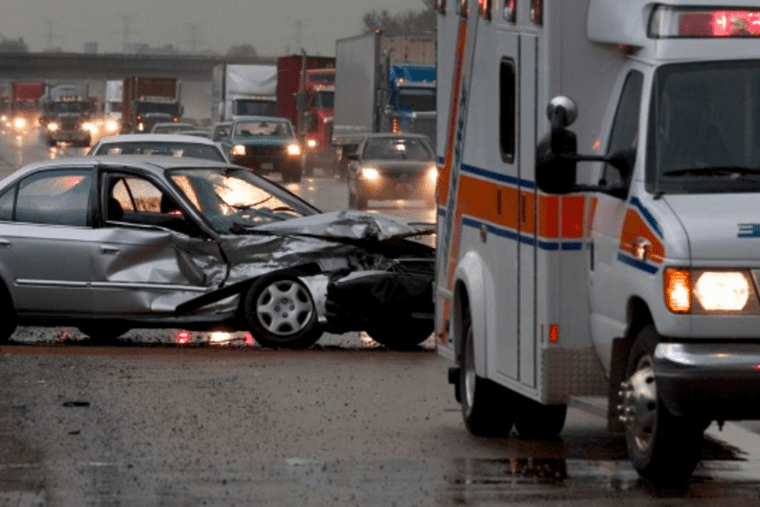
One day, Jane is driving on the highway from your primary office to a residential shelter to deliver donated hygiene packs. She looks away for a moment and doesn’t realize the car in front of her has stopped, resulting in a multivehicle accident.
Jane’s $20,000 property damage liability isn’t enough. Once she hits the coverage limit, the insurance companies start looking for other avenues of reimbursement. Because Jane was driving for business purposes, the insurance companies and lawyers come knocking on your door.
Naturally, you turn to your commercial auto insurance policy to help with the additional coverage. But you quickly realize your policy only covers vehicles that your organization owns. Since you don’t own Jane’s car, there is no coverage for your agency. And you don’t have hired and nonowned auto insurance, so Jane’s personal vehicle is not covered under your agency's policy.
The money runs out and the costs start going up. Your nonprofit is open to lawsuits.
Understanding hired and nonowned auto insurance
Hired and nonowned auto insurance covers damage caused by vehicles your organization doesn't own but are used for business purposes. It covers various expenses, like:
- Legal fees
- Damage to other vehicles
- Damage to property, such as a light pole
- Bodily injury to other people
You can add hired and nonowned auto coverage to your existing commercial auto insurance policy.
Who needs hired and nonowned auto insurance?
If there's any chance your employees or volunteers will drive their personal vehicles for business purposes, your nonprofit should seriously consider hired and nonowned auto insurance. Here are some situations that call for hired and nonowned auto coverage:
- Your employees, volunteers or board members rent vehicles for special events, training or outings.
- You give employees, volunteers or board members an auto allowance to use their personal vehicles for business.
- You let employees, volunteers or board members drive their personal vehicles to pick up supplies or special items for the office.
- Your employees, volunteers or board members use their personal vehicles to visit clients or work at special fundraising events.
- Your employees, volunteers or board members use their personal vehicles to collect agency donations.
- Your employees, volunteers or board members regularly use their personal vehicles to conduct agency business, even if you are unaware of it. (Not knowing is not a legal defense.)
It takes just one accident and a lack of insurance to put an entire annual budget at risk. Contact your insurance professional and put risk liability safeguards in place.
Contact your insurance agent
Nonprofits depend on paid and unpaid staff to help them with critical functions. These often include driving personal vehicles for agency activities. But without proper agency auto protection, one collision could cripple your budget or force your nonprofit to close its doors.
Contact your Rathbun insurance commercial account executive to get a quote for hired and nonowned auto insurance. They’ll help you manage your risk and protect your organization so you can keep serving the community for years to come.